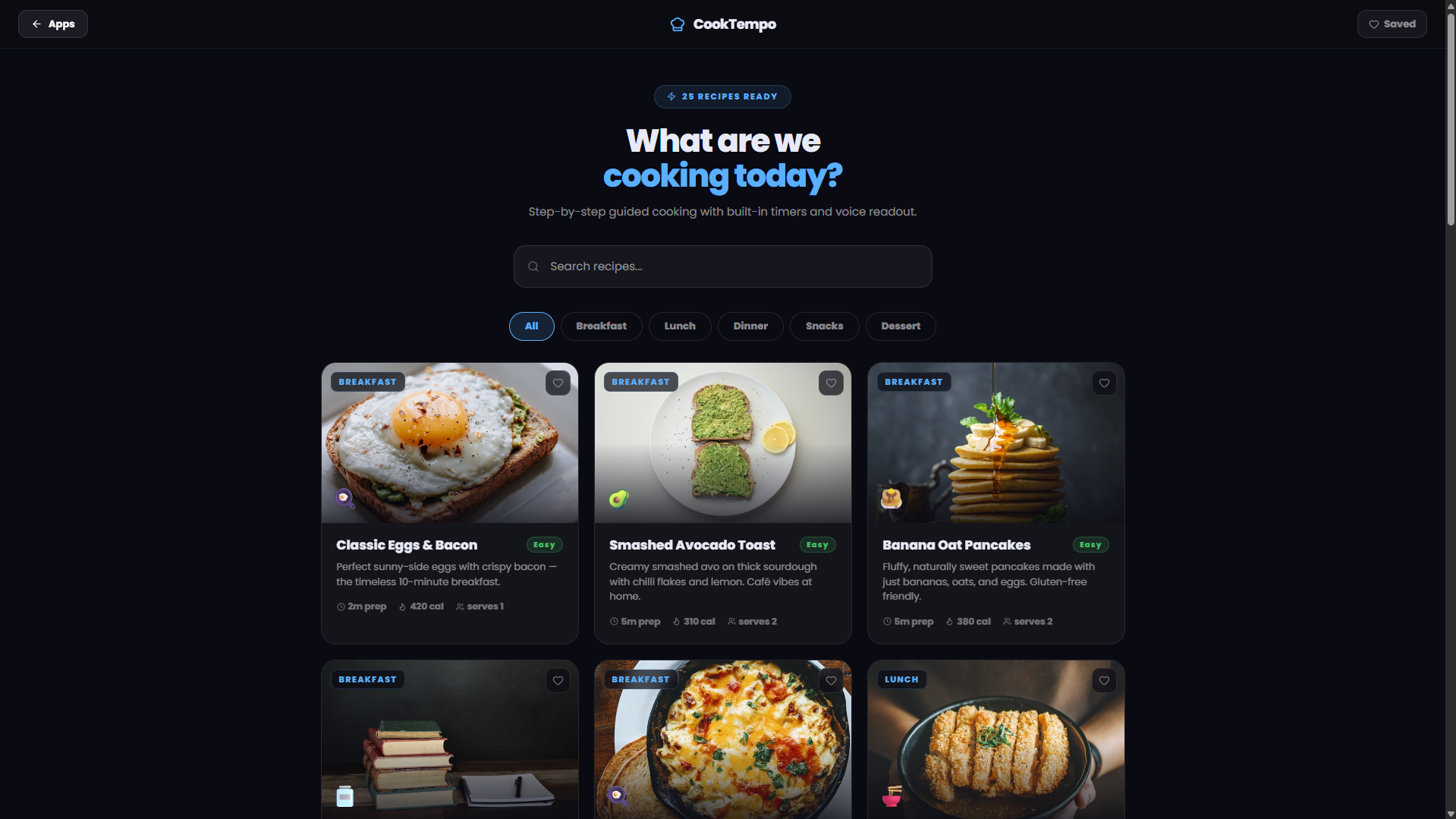
Overview
CookTempo is a multi-timer cooking app that runs multiple independent countdowns simultaneously. The core problem it solves is one every home cook knows: juggling a pasta timer, an oven timer, and a resting timer at the same time, across three different devices, while actually trying to cook.
CookTempo puts everything in one place, installs to your home screen like a native app, and keeps working when your connection drops. No account, no subscription, no distractions.
Core Features
- Unlimited simultaneous independent countdown timers
- Custom timer library with persistent LocalStorage saves
- Installable as a PWA with full offline support via Service Worker
- Haptic feedback on timer completion for hands-free cooking use
- Recipe-linked timer presets for repeatable multi-step meals
- Clean dark UI optimised for quick glances across the kitchen
Progressive Web App Architecture
CookTempo is built as a Progressive Web App from the ground up, not retrofitted. The Service Worker pre-caches the entire app shell on first visit, so subsequent loads and offline sessions are instant. Timer state is persisted to LocalStorage so a closed tab or a page refresh never loses your countdown.
The install prompt is handled with a custom beforeinstallprompt listener, giving the UI full control over when and how the “Add to Home Screen” prompt appears rather than relying on the browser’s default timing.
Design Decisions
The entire interface was designed around the context of use: a kitchen, usually from a distance, with wet or busy hands. That meant large tap targets, high-contrast text, and audio and haptic alerts as the primary notification method rather than visual badges that require looking directly at the screen.
Timer cards are independently scrollable and can be reordered via drag, so users can arrange them to match the actual sequence of steps in a recipe. Labels support emoji so timers for “pasta,” “sauce,” and “chicken” are distinguishable at a glance without reading.
What I Learned
PWA development taught me how much friction the install experience still carries on iOS versus Android. Designing around those constraints, especially the lack of push notification support on iOS at the time, pushed the haptic-first alert model that ended up being the right call for cooking anyway.